How to Build Garden Steps with Timber Sleepers
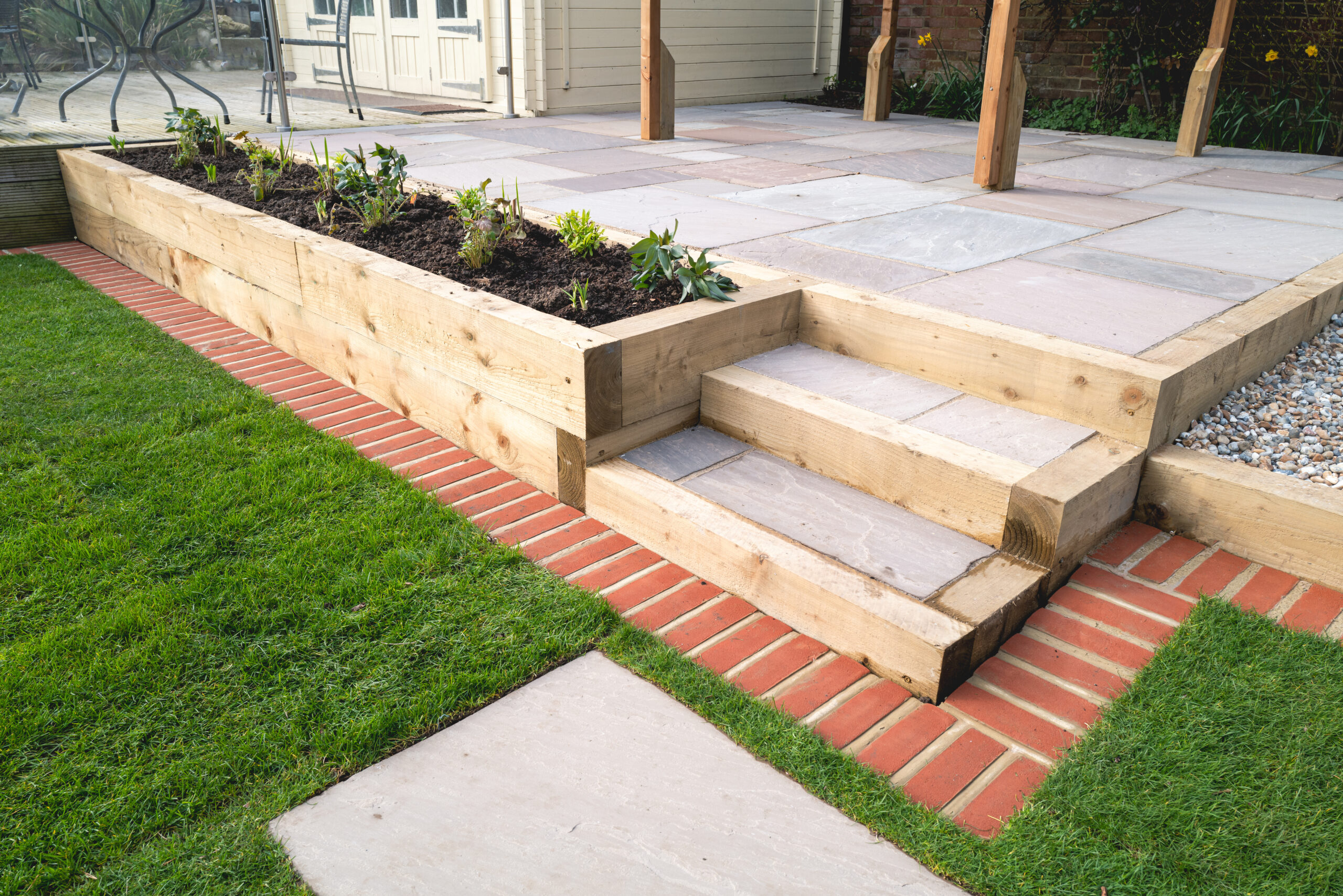
Timber sleepers are increasingly being used in garden renovation projects, as they are extremely versatile – offering a huge range of different use cases – while also being super affordable, and a great eco-conscious choice.
So, if you’re thinking about using timber sleepers in your garden, keep reading!
Below, we’ve used this article to provide a quick guide to building garden steps with timber sleepers.
What are timber sleepers?
Timber sleepers are large, rectangular pieces of wood. They are also known as railway sleepers, as they were traditionally used to support railway tracks.
Timber sleepers are widely available, both as new products and from reclaimed materials.
Why use timber sleepers for garden landscaping?
Thanks to their strength, affordability and rustic appearance, timber sleepers are a popular material in garden landscaping.
The benefits of using timber sleepers for these projects include:
- Eco-conscious material – Timber is a great naturally sustainable construction material, which still boasts a long lifespan.
- Sustainability – Reclaimed railway sleepers are a fantastic sustainable choice, with minimal environmental impact.
- High durability
- Natural weather-resistance
- A timeless, natural aesthetic
How can sleepers be used for garden landscaping?
Timber sleepers can quickly and affordably transform a garden, adding structure and definition in a visually unobtrusive way.
In addition to steps (which we’ve covered in more detail below) timber sleepers can be used for:
- Planters and raised beds
- Retaining walls
- Seating
- Edging
Typically, a standard timber sleeper will be 2.4m long x 100mm high x 200mm deep.
Depending on its size and the type of wood used, a timber sleeper will weigh between 30-60 kg.
How to build steps with timber sleepers
Depending on the step’s width and height, a typical garden will require:
- 2 sleepers per step – With one for the riser and one for the tread. Or, if you backfill behind it, 1 sleeper per step.
A standard rise is around 150mm, and a tread is typically 300mm or more.
So, to calculate how many steps and sleepers you’ll need, measure the total height you want to cover, and divide this number by the step rise.
Once you have completed this calculation, follow the steps below.
1. Mark out and prepare the area
- Measure where each step will be positioned (using a tape measure and spirit level), and mark it using chalk or string.
- Following these markings, dig out the soil to form level trenches. We recommend digging 100mm deeper than the height of each sleeper.
2. Fill the base
- Fill the base with compacted Type 1 MOT or hardcore. This will help maximise stability.
3. Position the sleepers
- Place the first (lowest) sleeper in the prepared trench, and use a spirit level to check it’s even.
- Fix the sleeper in place with landscaping screws or timber pegs.
- Repeat with the rest of the steps, checking with the spirit level as you go.
4. Backfill the steps (optional)
- If you plan on backfilling the steps, fill the tread area with your chosen material.
- This could be gravel, soil and grass, or timber decking, for example.
When you’ve finished installing the steps, you’ll also want to consider the surrounding landscaping. For example, you could add plants alongside either side of the steps, to make it more of a feature piece. Or, to make the steps more usable at night, you could add solar-powered lights by the steps.
If you’re looking for a trusted supplier of timber construction materials, Planet Timber is on hand to help.
We supply a huge variety of timber materials and accessories – including premium quality timber sleepers – with flexible services to suit projects of any size and scope.
To find out more about our services, or to arrange a delivery for your project, speak to our team today.
Other Recent Posts

How to Stop Garden Sleepers and Outdoor Timber Cracking in the Summer Heat
This year’s summer has been one of the hottest on record, with temperatures soaring to over 35°C across the UK. For keen gardeners, this summer has certainly been a nerve-wracking one. We know that excessive heat – coupled with extremely limited rainwater – can have a major impact on your garden. But, most people tend […]
Read More… from How to Stop Garden Sleepers and Outdoor Timber Cracking in the Summer Heat

Plywood, OSB or MDF: Which Sheet Material Do You Need?
Three of the most common material types offered by timber merchants are plywood, OSB and MDF. And at first glance, these materials can seem to be extremely similar. In fact, they’re often displayed side by side at a timber merchant! But, each of these materials is precisely designed, to fulfill their own specific requirements and […]
Read More… from Plywood, OSB or MDF: Which Sheet Material Do You Need?

Composite vs timber: what’s best for fencing?
Modern fencing solutions are designed to achieve a long lifespan, remaining sleek and polished for many years to come. Composite and timber are the two most popular materials for fencing systems. While timber is the traditional choice – having featured in countless fences across the decades – composite fencing is an equally popular material, known […]
Read More… from Composite vs timber: what’s best for fencing?
Featured Range


We are always ready to help you and answer your questions
Business Hours
Monday – Friday: 8am – 4.30pm
Saturday: 8am – 12.00pm
Sunday: Closed